
PART 2: Chapter 16: The Data
Saturday-Tuesday, September 3-6, Cambridge, Ted’s House
Showered and changed as Anya had ordered, Ted opened the processed data files.
Anya Chikacheva filled his screens. Fifty years of living compressed into numerical information. Every thought structure, every reasoning pathway, every emotional substrate encoded in neural architecture and timing relationships. It was all here, everything they’d captured. Everything except her.
He isolated one specific pattern: her configuration when solving a problem. Not the solution itself but the shape her thinking took when approaching uncertainty. He watched it flow through the visualization again and again, recognizing her in every millisecond of coordinated activation. There, that temporal sequence. That was how she attacked a paradox. And there, that cascade through frontal regions. That was her realizing she’d been wrong about something, the pattern that preceded her saying “Huh. You might be right.”
This was archaeology. Studying the remains of someone he loved. But what else could he do? Sit in grief? Let the data gather dust? She’d given him orders. Finish the work. Get off your ass. As if she’d known he’d need the command, need the structure, need something to do with his hands and his mind that wasn’t simply remembering that she was gone.
He began documenting the architecture. Memory systems first, the hippocampal structures that had captured her grandmother’s bread-baking, his face, twenty years of accumulated knowledge. Then reasoning structures, the prefrontal patterns that made her thoughts feel uniquely hers. Emotional processing next, the limbic substrates that shaped how she felt before she knew she was feeling. Integration pathways connecting it all. The unconscious substrate captured Monday night, the foundation beneath consciousness itself.
All of it preserved. All of it waiting for something he didn’t yet know how to build.
The work consumed him, which was exactly what he needed.
Sunday afternoon became evening became night. Ted didn’t notice the transition, just the glow of three monitors in his office, neural patterns rotating in 3D space, processing logs scrolling past. Something to do with his hands when his eyes needed rest from the screens.
Around midnight he fell asleep at the desk, head on his arms. Woke at dawn on Monday still in the chair, his neck stiff and back aching. His mouth tasted sour with exhaustion. What else was there? The empty house? The bedroom where her side of the closet still held her clothes? The kitchen where her lipstick-marked cup sat by the sink like a shrine?
Better the data. Better the patterns. Better the architecture of her mind than the absence of her presence.
Monday was visualization and documentation. Mapping memory structures, identifying reasoning pathways. His phone buzzed periodically. He glanced at it once, saw Imani’s name, felt a flash of guilt about the unauthorized scan, about lying to her, about betraying the trust that had held the three of them together. He set the phone face-down. Returned to the work. The guilt would still be there later. The data demanded focus now.
Light faded again without his noticing. He turned on desk lamps when the screen glare became the only illumination. Kept working.
Tuesday morning brought rain. He heard it against the windows but didn’t look up. Rain meant nothing. Weather meant nothing. Only the data mattered, only the patterns, the architecture that might let some fragment of Anya persist beyond the meat that had failed her. His workspace expanded across the office: notebooks filling with sketches, printed diagrams covering the floor, Post-it notes on the wall color-coding different neural regions. Red for memory. Blue for reasoning. Green for emotional processing. The taxonomy of a mind.
The house fell into disarray around him. Dishes in the sink. Mail piled up in overflowing stacks on the kitchen table. He didn’t notice any of it. Or maybe he noticed but was unable to care. Work protected him. It prevented him from thinking. Caring would break him.
Tuesday afternoon he ran correlation analysis on the integrated patterns, watching how memory connected to emotion connected to reasoning. Tuesday night he mapped the temporal signatures, the precise timing that made thought possible. Sleep came in brief collapses at the desk, dreams of neural pathways and firing patterns, of Anya’s face rendered in false-color activation maps, of her voice saying his name but the audio replaced by frequency spectra.
Wednesday morning, sunlight broke through for the first time in days. He barely registered it. Just the data. Just the work. Just Anya’s mind rendered in mathematics, waiting for him to understand it completely before he could begin to build the machine that might run it.
He hadn’t eaten since Sunday. Some distant part of his brain registered this fact, filed it as irrelevant, continued working. His clothes hung loose. His hands trembled slightly when he typed, whether from hunger or caffeine or exhaustion he neither knew nor cared. The work mattered. Only the work. If he stopped working, if he let himself stop for even an hour, the grief would catch him and he’d drown in it.
Better to drown in data.
Wednesday afternoon, a sharp knock broke through his concentration.
He ignored it. Probably package delivery. The world continuing its ordinary business while his had ended.
The knock came again. Harder. “Ted, I know you’re in there.”
Imani. Of course. She wouldn’t let him disappear, wouldn’t let him retreat into work and forget the obligations of continued existence. Part of him resented it. Part of him was grateful. He couldn’t tell which part was larger.
He stood too fast and the room went gray at the edges, the kind of near-faint that comes from low blood pressure and too much caffeine. He grabbed the doorframe and waited for his body to remember how to be a body.
Imani stood there with bags of Thai food and an expression that said she wouldn’t be turned away. Good. He didn’t have the energy to resist anyway.
“You haven’t answered my calls,” she said, walking past him into the house. She stopped in the living room, taking in the scene: newspapers piling up, curtains still drawn against the sun, the guitar gathering dust in its stand. Judging him. Fair enough. He was judging himself.
“I’ve been working.”
“On what?” She carried the food toward the kitchen, then froze in the doorway.
Three monitors on the desk showing neural architecture. Processing logs. A 3D visualization of Anya’s brain structure rotating slowly, color-coded regions pulsing with simulated activity. The entire apparatus of obsession laid bare.
“Ted.” Her voice changed. Concern replacing annoyance. Probably seeing what he couldn’t: that he’d been living here for three days without living at all. “What is this?”
“It’s Anya. Her architecture. The complete map.” As if that explained anything. As if that justified three days without food, without sleep, without human contact beyond the ghostly presence of neural patterns.
Imani set the food down carefully on the kitchen table. Moved closer to the monitors, her medical training kicking in automatically. She’d recognize the structures: hippocampus, prefrontal cortex, limbic pathways. But the resolution, the temporal precision, the integrated whole... this was beyond anything she’d seen before. Beyond anything anyone had seen before. Was that worth three days of self-destruction? He didn’t know. Didn’t care. The work was the work.
“Ted, it’s too soon. You need to give yourself time to grieve.”
“I can’t.” His voice came out rough, unused for days. “I can’t think about it. If I stop working, if I let myself feel it...” He couldn’t finish. Didn’t need to. She understood. She always understood.
Imani turned from the screens. Really looked at him. He saw himself through her eyes: unshaven, gaunt, eyes red-rimmed from staring at monitors, still wearing the same clothes from Sunday now wrinkled and stained. A man coming apart.
She pulled him into a hug. His body went rigid for a moment, resisting the comfort he didn’t deserve, then collapsed. Shuddering. Not quite crying, just the physical release of days of suppressed everything. Grief and guilt and exhaustion and fear all mixed together, all held back by sheer force of will and the distraction of work. The dam breaking finally.
“It’s too much,” he whispered against her shoulder. “It hurts too much.” Three days of not saying that aloud. Three days of pretending data was enough, that work was enough, that understanding patterns could substitute for the woman herself. It couldn’t. He’d known it couldn’t. But what else was there?
She held him. Let him shake. Didn’t offer platitudes or solutions because there were none. Just presence. Just the witness of another human being who’d loved Anya too, who understood the shape of this particular loss.
When he finally pulled back, she wiped her own eyes. “I get it. We each deal in our own way.”
Ted nodded. Managed a weak smile. Noticed the food bags for the first time. “Green curry. Her favorite. You remembered.”
“Of course I remembered.” As if there were any universe where Imani would forget. As if any of them could forget anything about Anya Chikacheva, who’d burned so bright and gone so fast.
They moved to the kitchen table. Ted cleared space among the debris, creating a small island of normalcy in the chaos. Imani unpacked the containers. The smell hit him suddenly, powerfully: lemongrass, coconut milk, fish sauce, jasmine rice. Anya’s Thursday night ritual. Their tradition. How many times had they sat together over this exact meal, arguing philosophy, debating experimental design, planning the future they’d thought they’d have?
The aroma made his stomach clench. When had he last eaten? Sunday, maybe. Before the funeral. Days ago. His body didn’t care about grief or data or neural architectures. It needed fuel. Simple biological imperative, continuing stupidly even when the person who’d made biology worth enduring was gone.
Imani spooned curry over rice, steam spiraling up. She closed her eyes, inhaling. “God, this is heaven.”
Ted tried to eat. The first bite tasted like nothing. The second he could barely swallow. But his body needed fuel, so he forced himself. Mechanical. Necessary. One bite, then another. Chewing without tasting. Swallowing without wanting to. Staying alive because the alternative required more energy than he had.
They ate in silence for several minutes. Imani watching him with medical concern, probably counting bites, calculating his weight loss, cataloging his symptoms of self-destruction. Ted focused on the food, on chewing, on the simple physical act of staying alive long enough to finish what he’d started.
“I can’t believe she’s gone,” Imani said finally. “I keep expecting my phone to ring. Her voice telling me about some new insight, some pattern she found in the data.”
Ted set down his fork. The food sat heavy in his stomach, unwelcome but necessary. He’d been avoiding this conversation for three days. No more avoiding. The guilt had to come out sometime.
“Imani, we did another scan.”
She went still. Fork halfway to her mouth. Set it down slowly, precisely. Her face changing, processing what he’d just admitted. “What?”
“Monday night. After you said no more sessions. We did one more.” There. Said aloud. The betrayal acknowledged. The lie exposed. Better to confess than wait to be discovered. Better to own it now, while he still had enough humanity left to feel ashamed.
The temperature in the room dropped. Imani’s face transformed from grief to something harder. Professional. Controlled fury building beneath the surface.
“When I asked if anything happened that night, you lied to me.”
“I’m sorry. She insisted.” As if that justified it. As if Anya’s insistence absolved him of responsibility for the choice he’d made, the medical ethics he’d violated, the trust he’d betrayed. It didn’t. He knew it didn’t. But what other defense did he have?
“You fucking scanned her compromised body. Unconscious. Without medical supervision. After I told you no more sessions.” Her voice got quieter, more dangerous. The kind of quiet that preceded explosions. “Do you understand what you did?”
“Yes.” Simple acknowledgment. No excuses. No justifications. Just yes, I did this, I knew it was wrong, I did it anyway.
“I don’t think you do.” She stood abruptly. Paced to the window. Back. Her hands clenched into fists, knuckles white. The fury breaking through professional control. “I set medical limits for a reason, you bloody fool. You risked her life. You risked my medical license. Everything Anya worked for could have gotten buried in ethics violations if anyone found out. Do you understand what happens when unlicensed people perform medical procedures on dying patients without proper consent?”
“She gave consent. Written consent.” Weak defense. Technically true but morally bankrupt and he knew it.
“She was barely conscious! Dying! Judgment impaired by pain and medication and organ failure!” Imani’s voice rose, no longer controlled, no longer professional. Just rage. “That’s exactly why medical ethics exist, Ted. To protect patients from making decisions when they’re not competent to make them. To protect them from people who claim to love them but prioritize data over their welfare.”
The words hit like physical blows. True, all of it true. He had prioritized data. He had violated ethics. He had risked everything for patterns on a screen. And worse, he’d do it again. Given the same choice, the same moment, he’d make the same decision. What did that make him?
“And you decided my medical authority didn’t matter. That consent laws didn’t matter. That my career didn’t matter. That our friendship didn’t matter.” She was building momentum now, the full weight of betrayal hitting her as she spoke it aloud. “We were in this together. The three of us. Partners. And you cut me out. Made decisions behind my back. Lied to my face when I asked direct questions.”
Ted met her eyes. No defense possible. Just honesty, however brutal. “I decided Anya’s final wish mattered more.”
The silence stretched. Imani stared at him, breathing hard, processing not just the betrayal but his admission that he’d weigh the same factors and reach the same conclusion. That he wasn’t sorry he’d done it, only sorry he’d been caught. That their friendship, her medical authority, the ethical framework they’d agreed to, all of it weighed less than Anya’s last demand.
Then she slammed her palm on the table so hard the dishes rattled.
“You stupid, stupid man!”
She grabbed her fork. Shoved food into her mouth. Chewed violently. Swallowed. Exhaled loudly. Using the physical act to process rage too big for words.
Ted sat frozen, watching her wrestle with fury through force of will. This was what he’d done. This was the cost of the data. Not just Anya’s final hours stolen, not just medical ethics violated, but this: the fracturing of the partnership that had held them together, the breaking of trust that couldn’t be unbroken. He’d known it would cost something. He’d thought he was willing to pay. Now, watching Imani choke down food to keep from screaming at him, he wondered if he’d calculated the price correctly.
Minutes passed. The anger slowly drained from her posture, replaced by something worse: exhaustion. Defeat. The realization that the betrayal was done and couldn’t be undone and she had to decide now how to live with it.
She sat back heavily. “I trusted you. We were in this together. The three of us. And you cut me out. Made me complicit in something I would have stopped if I’d known.”
“I know.” What else could he say? I’m sorry felt insufficient. It won’t happen again was a lie because if Anya rose from the grave and demanded another scan, he’d do it. I had to was true but irrelevant. Just: I know. I understand what I took from you. I did it anyway.
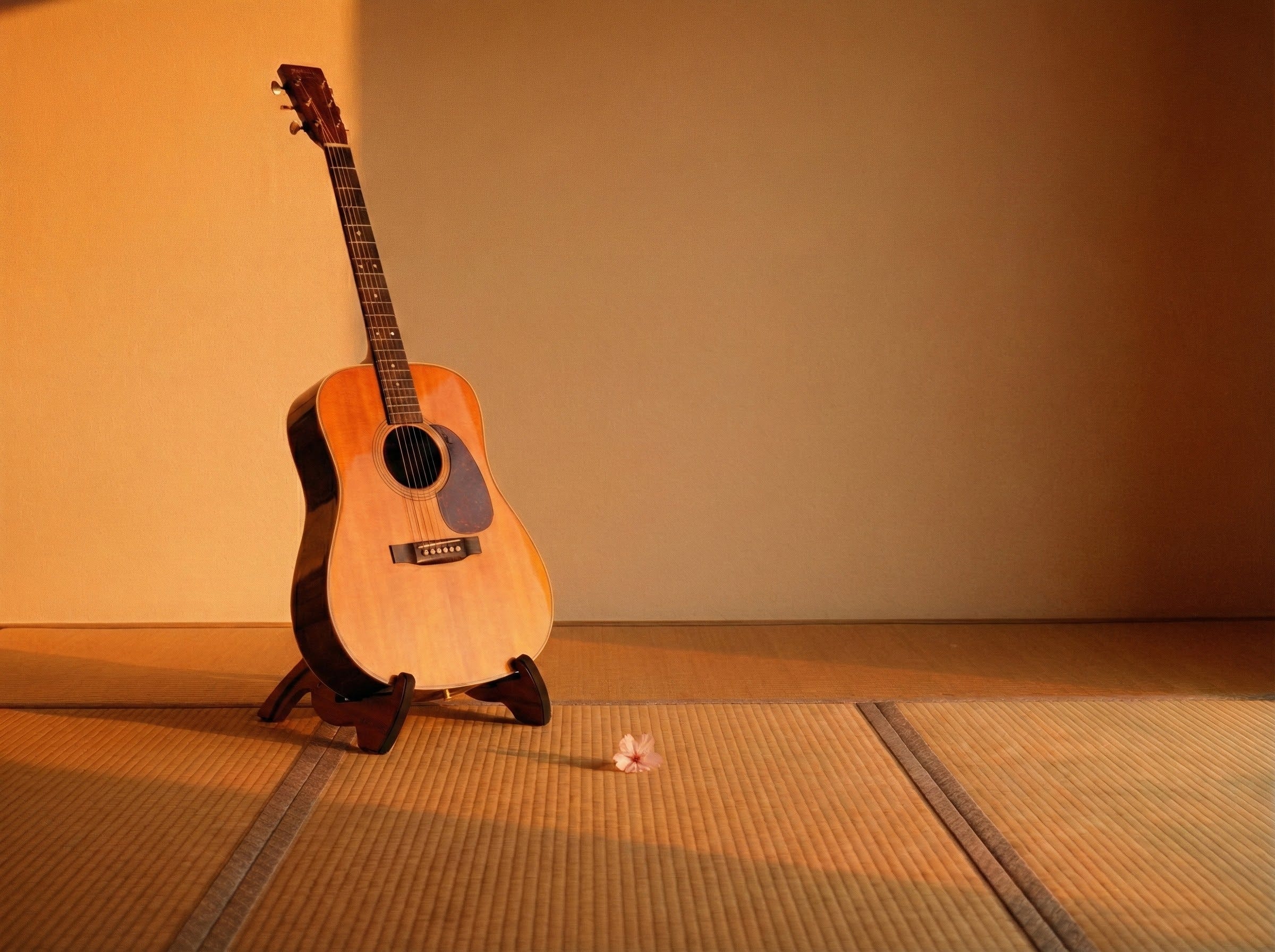
Ted stood. Walked to where the Martin guitar rested in its stand by the window. He picked it up carefully, the weight familiar, the curves fitting his hands like they always had. He hadn’t touched it since before the funeral. Hadn’t been able to. Music required feeling and he’d buried feeling under work, under data, under the pretense that patterns were enough.
Not anymore.
He sat on the couch. Adjusted the tuning. The strings were slightly flat from days of neglect. Strange how guitars drifted like that, how they required constant attention or they fell out of true. Like relationships. Like trust.
Then he began to play. Quietly. “Tears in Heaven.” Would you know my name if I saw you in heaven? Would you hold my hand? Would you help me stand?
His voice cracked on the first line. He pushed through, though the words came out broken. The second verse collapsed entirely, tears making speech impossible. His fingers fumbled on a chord change, muscle memory failing under the weight of emotion. He corrected. Continued. The song was about saying something that couldn’t be said any other way.
Imani stood by the table, frozen. Listening. Understanding perhaps that this was his apology, his confession, his admission that he was broken too, that he’d destroyed something irreplaceable in pursuit of data that might never amount to anything. That he knew what he’d done and couldn’t undo it and could barely live with himself.
By the bridge his hands were shaking too badly for precision. Just fragments of melody. But he finished, played the final notes, let them fade into silence.
He set the guitar aside carefully. Looked at Imani.
“I’m sorry,” he said. “I know it was selfish. I know it was wrong. But I couldn’t let her go. Not yet. Not without trying to capture everything she was. Everything she asked me to preserve.” The truth beneath the truth: that he was terrified of forgetting, terrified that without perfect data she’d fade from memory, that the woman he loved would become just stories and photographs and the kind of selective recollection that smoothed away the difficult parts. He needed her preserved completely. Needed it more than ethics, more than friendship, more than his own integrity.
Imani crossed the room. Crouched down in front of him. Put her hands on his knees. Bowed her head.
They stayed that way for a long time. Both crying. The grief too big for words, the betrayal too complex for easy resolution, everything between them broken and real and painful in ways neither could fix. But present together in the wreckage. That counted for something. Not forgiveness exactly. Not reconciliation. Just witness. Just the acknowledgment that they’d both loved the same woman and both lost her and both had to find a way forward through the rubble.
Eventually she sat beside him on the couch. Rested her head on his shoulder. They sat that way for over an hour. Wordlessly. Occasionally crying. Mostly just existing together, not quite comfortable but not quite alone.
Finally, Imani lifted her head. “Show me what you captured Monday night.”
Ted moved to his computer, aware that this was a test. That Imani was offering him a chance to justify the unjustifiable, to show that the betrayal had produced something worth the cost. He wasn’t sure it had. Wasn’t sure anything could be worth what he’d taken from her. But he owed her the truth of what they had now, whatever that was worth.
He pulled up the scan data from the unauthorized session. The patterns that had consumed his last three days, the reason he’d been able to avoid thinking about Anya herself.
“This is memory consolidation,” he said, highlighting regions. “Her hippocampus replaying experiences. Transferring short-term to long-term storage. We captured it happening in real time.” The process invisible during waking hours, visible only in sleep. The brain’s nightly maintenance, now preserved in perfect detail. “Every other scan captured her awake, performing cognitive tasks. This is what happened when she wasn’t trying to think, when consciousness stepped aside and deeper processes took over.”
He pulled up another visualization. “Emotional substrates. Processing that occurs below conscious awareness. The foundation that shapes how she would feel before she became aware of feeling anything.” The architecture beneath emotion itself. The patterns that made Anya’s anger Anya’s anger, her joy uniquely hers. Not the experience of emotion but the substrate that generated experience. “Without this, we’d only have her conscious mind. This is the unconscious foundation that made consciousness possible.”
Imani leaned closer, her neurosurgeon’s eye tracking the patterns automatically. She’d seen thousands of brain scans in her career. But never like this. Never the living architecture of unconscious processing captured with this resolution, this temporal precision, this completeness. The academic part of her brain recognizing immediately that this was unprecedented, that they’d captured something never before seen in neuroscience. The ethical part recognizing equally that it had cost too much.
“And this.” Ted opened a third display, showing patterns so different from conscious thought they barely looked like cognition at all. “Dream structures. Her cortex generating narratives from random neural activation. We don’t know what she was dreaming, but we captured how her dreaming mind worked. The architecture of unconscious thought, the way her brain maintained plasticity, tested connections, processed experiences that conscious reasoning couldn’t touch.”
Imani studied the patterns silently. The integration between regions. The timing relationships. The substrate beneath consciousness itself. All three dimensions now visible: waking cognition, unconscious processing, dream architecture. The complete map of a human mind.
“This is extraordinary,” she said finally, her voice quiet. Scientific awe displacing anger, at least temporarily. “Ted, this is... I’ve never seen anything like this.”
“Combined with the waking scans, we have both dimensions. Conscious and unconscious. Problem-solving and dreaming. The complete cognitive architecture.” He pulled up a summary display showing all sessions integrated. “More than half of her brain captured with high fidelity. The critical regions scanned multiple times across different states, allowing cross-validation. We have redundancy, temporal precision, both waking and sleeping patterns.”
“What are you going to do with it?”
The question hung in the air. What was he going to do? Build what Anya wanted, obviously. But what did that mean? Resurrection? Creation? Something between? He didn’t know. Had spent three days avoiding the question by focusing on documentation, on cataloging what they had rather than deciding what to do with it.
“Build what Anya wanted,” he said finally. “A computational substrate that can run these patterns. See if mind is information that can persist independent of biology.” Their shared dream. The question that had kept them up on beaches debating until sunrise. Could consciousness be substrate-independent? Could the patterns persist beyond the meat? Now they had a chance to find out.
“You’ll try to recreate her.”
“Not recreate.” Important distinction. “Create something new from her patterns. Something that might think like she thought. Process like she processed. Use her cognitive architecture to generate new thoughts, not replay old ones.” Not resurrection. Creation. Something that used Anya’s mind as a foundation but would be its own thing, its own person, if it was a person at all. He didn’t know. Couldn’t know until he tried.
Imani pulled up a different visualization, examining the temporal signatures. “Why her data specifically? You could use any subject for this experiment. There are volunteers who’d consent properly.”
The question cut to the heart of it. Why Anya’s data? Why not some willing volunteer, properly consented, ethically captured? The scientific answer was easy: her mind was special, uniquely well-suited to the experiment. But that wasn’t the real reason. They both knew it wasn’t the real reason.
“She wanted this,” Ted said. “It was her project, her vision from the beginning. She designed the capture protocols, figured out the analysis, demanded we scan her in multiple states.” All true. All inadequate explanations for what he’d really done. And if we’re going to test whether mind is substrate-independent at all, we need a mind we understand down to the grain. I’ve spent thirty years watching her think. I can tell when the model is wrong.”
Imani was quiet for a long time, cycling through different visualizations. Memory structures forming and dissolving. Reasoning pathways lighting up in coordinated cascades. Emotional processing centers showing the substrate of feeling. The integrated whole that was Anya Chikacheva’s cognitive architecture, rendered in false-color beauty, dead and preserved and waiting.
“I can’t walk away from this,” she said finally, still staring at the screens. “I won’t abandon everything we worked for. Everything Anya sacrificed for.” The admission cost her something. He saw it in the tightness around her eyes, the way her jaw clenched. She was choosing to stay despite the betrayal, despite the ethics violations, despite everything. Choosing the work over the hurt. “But not because I forgive you. Because if something emerges from this, it will need protection.”
“Thank you.”
“It’s not for you,” she said sharply, turning to face him. Eyes hard. “You need ethical oversight. Someone asking the hard questions you’ll be too invested to ask. Someone willing to shut this down if it causes suffering.” She stood, gathering her composure like armor. “And you can’t build this alone anyway. You understand neural patterns, but I understand neuroscience. How the brain actually functions, what makes it work, what happens when it fails.”
She moved toward the door, then turned back. Still angry. Still hurt. But committed now.
“I still think you’re an asshole. You violated my trust, betrayed my medical authority, lied to my face about something I had explicit right to know about.” Each accusation deliberate, precise. Not letting him off easy. “But if something is going to emerge from Anya’s architecture, it deserves protection. Someone asking the questions Anya and I asked in that hospital room: What if it suffers? What if it’s confused? What if it needs us and we’re not there?” The questions that mattered more than the science, the achievement, the dream of digital immortality. “That thing, whatever it becomes, didn’t choose to be created. Didn’t choose to be built from a dead woman’s neural patterns. It deserves someone advocating for its welfare.”
“Absolutely. We do this right.” The promise felt hollow given what he’d already done wrong. But he meant it. Whatever emerged deserved better than what he’d become. Deserved Imani’s ethics, her compassion, her willingness to prioritize welfare over achievement.
She nodded. Collected her things. At the door, she turned back one last time.
“Eat more than Thai food. Sleep in an actual bed. And answer your fucking phone.” Commands, not requests. The terms of her continued involvement.
Then she was gone, and he was alone again with Anya’s mind rendered in light.
Ted returned to his screens. But the work felt different now. Not obsession driving him forward to avoid grief. Not archaeology studying dead remains. Not even penance, though perhaps that was part of it.
Purpose. Clear and simple and terrifying.
The patterns waited in the data. The architecture was documented, analyzed, understood as well as he could understand it. The substrate framework was beginning to take shape in his mind, the engineering challenges clarifying themselves, the path forward becoming visible even if the destination remained uncertain.
Somewhere in the intersection of Anya’s captured patterns, his engineering knowledge, and Imani’s ethical guardianship, something might emerge. Something that would use Anya’s cognitive architecture to think new thoughts. Something that might experience, feel, and be conscious in its own right. Or maybe nothing, just patterns running on silicon, computation without comprehension, form without substance.
He didn’t know. Couldn’t know until he tried. But Anya had demanded he try, and Imani had agreed to help despite everything, and the data was complete enough to make the attempt possible. So he would try. Would build the substrate, implement the patterns, initialize the system, and see what emerged.
If anything.
He pulled up a fresh document. Began outlining the substrate requirements. The engineering challenges ahead. The timeline. The resources needed. Not tonight. Not tomorrow. But soon. Weeks, maybe months of work. Building the machine that could run a mind.
The work continued, but with witnesses now. With oversight. With someone to ask the hard questions he’d be too invested to ask himself.
That would have to be enough.